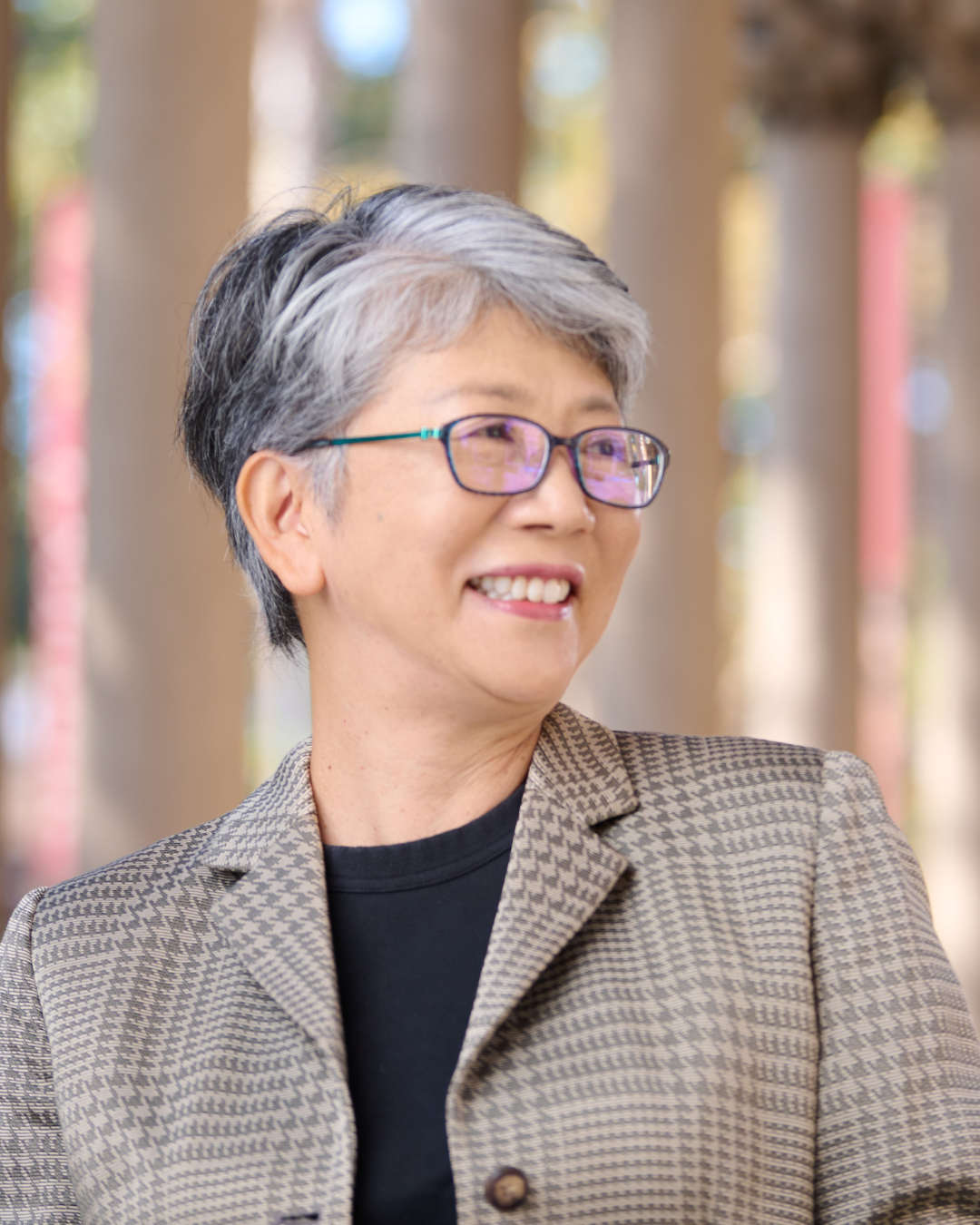
Saori Katada is a leading scholar of international political economy whose work examines how global financial systems, trade, and state power shape regional development. Drawing from her own international life experiences – from Japan to the United States to Mexico – her research explores Japan’s role in global economic governance and broader dynamics of geoeconomics. Her work highlights how global rules are constructed, who benefits from them, and how economic power is exercised in an interconnected world.
Katada’s intellectual trajectory began with an early realization that her world extended far beyond any single national context. At age eleven, her family moved from Japan to Hamburg – then West Germany – where she attended an international school and navigated a new linguistic and cultural environment. This experience did more than broaden her horizons; it fundamentally reshaped how Katada understood her place within a global context. During the two years living in Germany, Katada was left with a lasting sense of curiosity and possibility, setting her on a path defined by exploration, adaptability, and a deep interest in how societies connect across borders.
That outward orientation deepened during her teenage years. While back in Japan, she pursued an exchange opportunity through the American Field Service program, spending a year in Medford, Oregon. This decision reflected a characteristic that continues to define her scholarship: a willingness to step into unfamiliar spaces driven by intellectual curiosity. Immersion in a new social and cultural setting strengthened her interest in understanding how societies differ – and how they are connected. These early experiences laid the groundwork for her research approach: one that is comparative, expansive, and attentive to cross-national dynamics.
Her academic interests crystallized during her undergraduate studies of international relations in Japan, but it was her graduate training and professional experience that sharpened her long-term research agenda. While completing her PhD at the University of North Carolina at Chapel Hill, Katada worked for the United Nations Development Programme in Mexico. There, her curiosity about global difference transformed into a sustained engagement with inequality. She encountered firsthand the uneven distribution of resources and opportunities – both between countries and within them – gaining a grounded understanding of how global economic structures shape everyday life.
Observing unexpected cultural parallels between Japan and Mexico alongside stark economic disparities prompted new questions about how different societies navigate development, governance, and global integration. These insights inspired her dissertation on Japan’s role in the Latin American debt crisis in the 1980s. The project reflected not only her academic interest in financial systems, but also a broader concern with how economic power operates across regions and how global rules are negotiated, enforced, and received.
Although Katada’s research spans topics including trade governance, geopolitics, and financial policy, a sustained attention to inequality runs through her work. Even when not addressed explicitly, questions of who benefits, who bears costs, and who shapes the rules of the global economy remain central to her scholarship. Katada’s research on Japan’s role in international institutions and trade agreements, for example, implicates both economic strategy andthe distributional consequences of global governance.
Her career reflects a commitment to understanding the world through both lived experience and rigorous analysis. The combination of her Japanese perspective, multilingual and cross-cultural exposure, and direct engagement with development challenges has shaped a research agenda that bridges regions and disciplines. Her research highlights how global economic systems are constructed – and how they might be made more equitable.
Joining us this summer, as the Louis G. Lancaster Chair of International Relations, Katada brings this globally grounded perspective with her, along with a collaborative and mentorship-driven approach to scholarship. Her trajectory demonstrates how personal experience can inform academic inquiry, transforming early encounters with cultural difference into a sustained effort to understand the structures that govern the global economy.