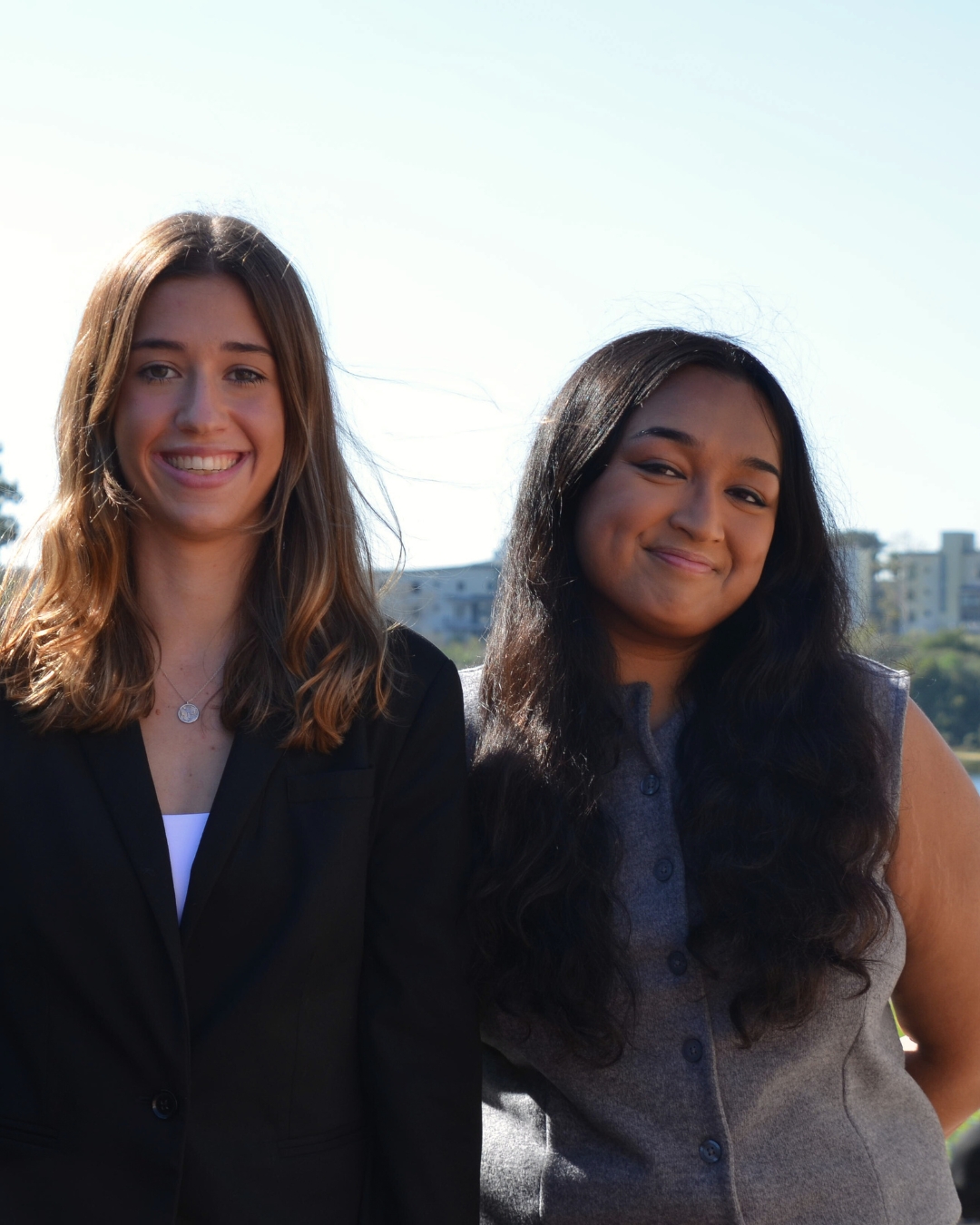
What begins in the classroom at UCSB can sometimes grow into something bigger. For political science undergraduates Samira Sinha and Hannah Weaver, a group project in Professor Bimber's Political Communication course led to ongoing research examining how conservative and mainstream media frame federal actions affecting higher education, including the University of California system. This quarter, they have continued refining their research questions and methods, including experimenting with AI to better understand patterns in media coverage. Read more about their academic journey, what they hope to explore, and how the experience is shaping their future interests.
Samira and Hannah didn’t set out to launch an independent research project. They signed up for Political Science 172—Political Communication—expecting what most students do: new readings, big ideas about media and democracy, and a final group project that would last the confines of a ten-week quarter. Instead, that assignment became the starting point for a research partnership they’re now continuing beyond the syllabus—one that asks timely questions about media framing, domestic policy, and democratic accountability.
In class, students were assigned readings to better understand the world of political communication – from cognitive biases that shape how we respond to messages to perceptions of political violence. But it soon became more than that. Randomly assigned groups were created – each with a different research question that evaluated and tested the concepts taught in class. Hannah and Samira’s original task was to identify systematic variation in how major news outlets cover and frame Trump-era education policies. Working within the confines of a course project, they focused on how media frames shape long-term perceptions—especially when Congress may be reluctant to contest presidential actions, and where public opinion can either reinforce oversight or quietly erode it. Time constraints forced tough tradeoffs. The more they read, the more they wanted to refine, expand, and test.
After the course ended, Samira and Hannah moved the work into an independent research study with Professor Bimber the following quarter. They expanded their scope to include another topic: media coverage of Trump’s actions toward law firms he viewed as hostile to him. To Samira and Hannah, the shift wasn’t just about doing more. It was about following their curiosity: with clearer research questions, a stronger methodological approach, and the space to follow what they saw in the data.
Part of their confidence to continue came from what they didn’t find: scholarship explaining the answers they sought. As they reviewed the literature, they noticed that there was little research directly comparing conservative and mainstream framing of Trump’s domestic policies—especially using the lens they developed. For both Hannah and Samira, the topic is inherently relevant: as university students, they are watching debates about higher education unfold in real time. As pre-law students, expanding the project to law firms connects directly to the field they hope to enter.
Their partnership highlights what research can teach beyond its immediate findings. Samira entered the project with years of experience coding and analyzing data, and she helped steer the group through complex steps like building a codebook, testing reliability, and running statistical analyses. Hannah, meanwhile, emphasized how being involved across the research process—coding, writing, revising, presenting—turned a class requirement into a space where she could truly immerse herself in research. Reading through and truly understanding the five-hundred-plus news stories allowed her to see the full picture of the question they were exploring. Both acknowledged what many students quietly learn: group work is rarely perfect, but the practice of negotiating timelines, standards, and responsibilities mirrors the reality of professional research and successful collaboration.